Hardwood Floor Water Damage Restoration in Fairfax, Virginia
Hardwood floors have a narrow save window after water exposure. After 24–48 hours, cupping and buckling become permanent. We respond fast with specialized drying systems that give your floors the best possible chance of being saved.
Hardwood and Water: Why Speed Is Everything
Hardwood flooring is most common in the older housing stock across Fairfax County — Mantua's 1950s-60s ranchers with original oak strip flooring, the historic homes of Old Town Fairfax with quarter-sawn oak and maple, the mid-century split-levels in Annandale and Springfield, and the estate homes throughout McLean and Vienna that often have wide-plank or specialty hardwoods. Hardwood flooring is hygroscopic — it absorbs moisture from its environment, expands, and contracts as humidity changes. Under normal conditions, this movement is minimal and managed by expansion gaps. Under water damage conditions, the rate of moisture absorption far exceeds what the floor system can accommodate, and damage begins immediately.
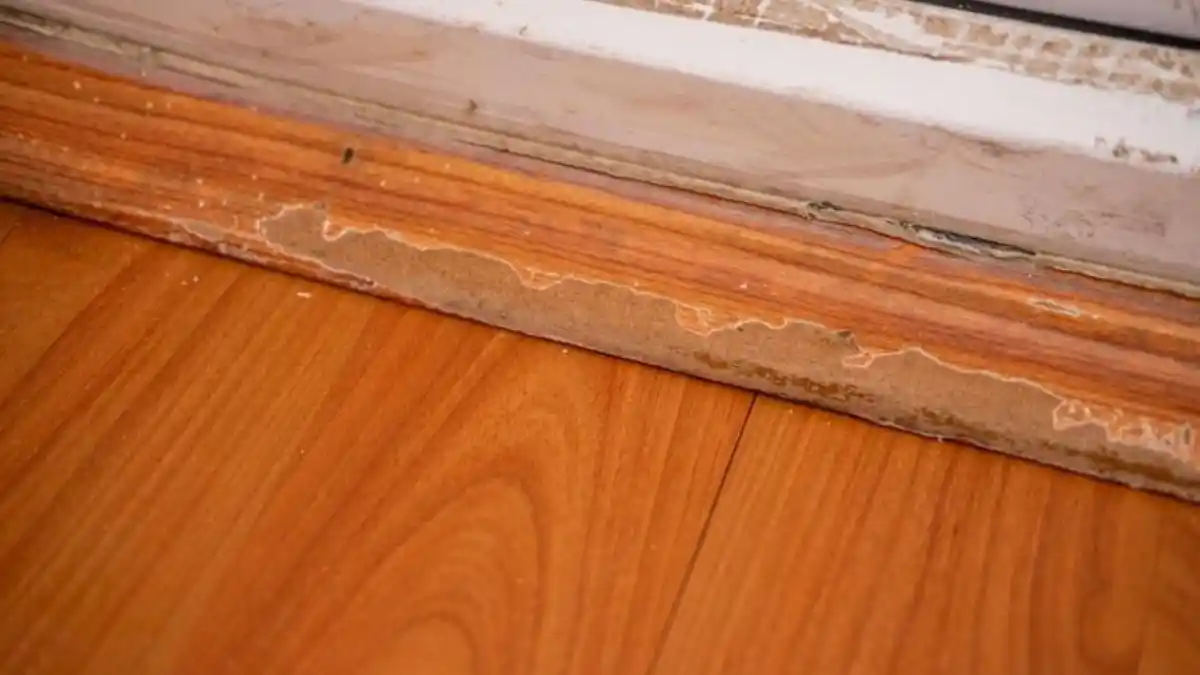
The critical behavior to understand: the bottom face of a hardwood plank absorbs water faster than the top face, which is protected by the finish. This differential swelling causes the edges to cup upward — the characteristic symptom of water-damaged hardwood. If the floor is dried within the correct window and at the correct rate, this cupping can reverse. If it dries too slowly, or if the wood dries in the cupped position, the deformation becomes permanent.
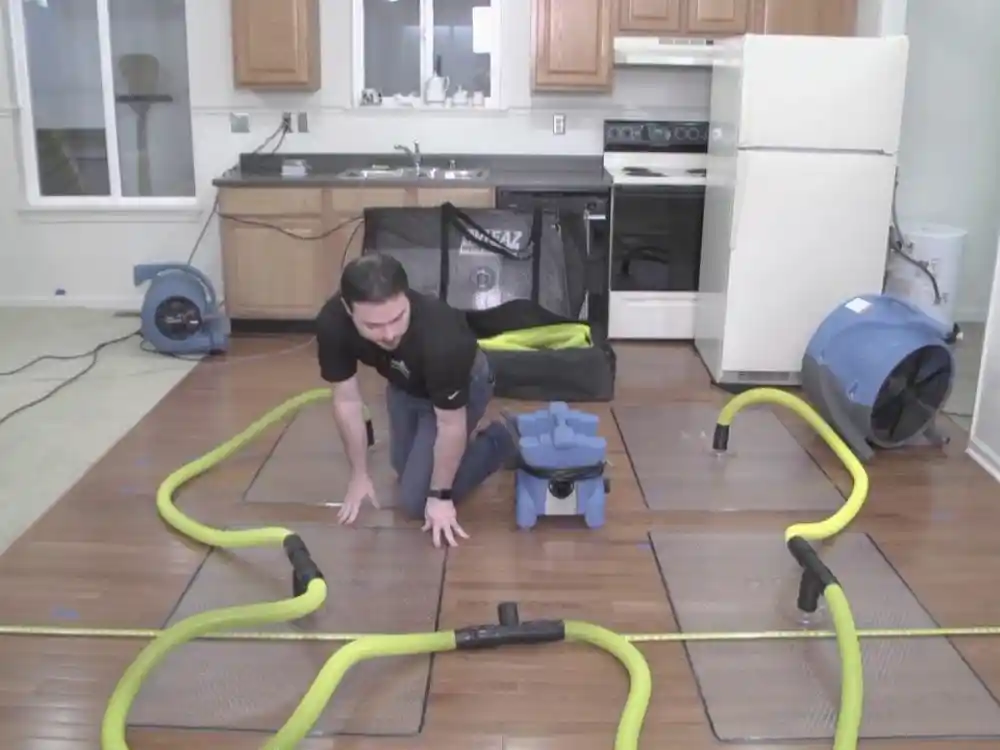
The single biggest mistake homeowners make with wet hardwood: running box fans. Fans dry the finished top surface faster than the subfloor draws moisture out from the bottom — which makes cupping worse, not better. Proper hardwood drying requires dehumidification paired with controlled floor drying mats or carefully calibrated airflow systems that equilibrate moisture from both sides of the plank simultaneously.
What Water Does to Hardwood — and What Signals the Point of No Return
Stage 1 (0–24 hours): Surface wet, minor cupping beginning. Ideal response window — most floors can be saved with immediate professional drying.
Stage 2 (24–72 hours): Cupping more pronounced. Subfloor moisture elevated. Mold risk beginning. Saving the floor is possible but requires aggressive response. Some planks with high moisture absorption may not recover.
In Reston's original Lake Anne village townhomes, in the Burke Centre townhouse clusters from the 1970s, and in the older Herndon homes north of Elden Street, we see the full range of these scenarios on a regular basis. Stage 3 (72+ hours): Buckling (full lift from subfloor) in sections. Permanent deformation likely in heavily affected areas. Subfloor mold risk significant. Replacement increasingly necessary.
A homeowner in the Fair City neighborhood of Fairfax called us 18 hours after a refrigerator water line failed while they were away for a weekend. The kitchen had quarter-sawn white oak hardwood, and 2.5 inches of standing water had been present for the entire period. On our moisture assessment, the planks measured 32% moisture content — dry hardwood is typically 6–9%. We deployed floor drying mats and dehumidifiers immediately. By day 6, moisture content had equalized to acceptable levels. Cupping was moderate — 80% of the floor was saved and the remaining 20% received board replacement to match. The homeowner avoided a full floor replacement, saving approximately $8,000.
What Hardwood Floor Water Damage Restoration Typically Costs in Fairfax
Most water damage jobs in Fairfax County fall between $1,500 and $5,000 depending on affected square footage, drying time, and whether wet drywall or insulation needs removal. We document everything with daily moisture readings and provide a written estimate before any work starts.
What affects pricing on a hardwood floor water damage restoration job:
- Square footage and number of rooms affected
- Type of materials affected (hardwood vs. carpet; drywall vs. plaster)
- Whether the cause has been corrected (an active leak extends the scope)
- Insurance involvement and documentation requirements
Insurance coordination: we've handled hundreds of claims with USAA, State Farm, and Allstate — three of the most common carriers in Fairfax County. Each has slightly different documentation preferences, and we adjust our reporting accordingly. Final invoices are submitted in Xactimate format when required.
Want a real number for your situation? Call (571) 708-6083 for a free on-site assessment.
How We Dry and Restore Water-Damaged Hardwood
Moisture Assessment
Pinless and pin moisture meters measure actual moisture content in planks and subfloor — gives us baseline readings and tracks drying progress daily.
Water Source & Subfloor Check
We confirm the water source is addressed and assess subfloor moisture — often more critical than the floor itself for long-term outcomes.
Floor Mat Drying System Deployment
Specialty hardwood drying mat systems create a sealed drying chamber under the floor — extracting moisture from both the plank and the subfloor simultaneously.
Dehumidification
Commercial dehumidifiers control ambient RH, creating the vapor pressure differential that drives moisture out of the wood.
Daily Monitoring
Daily moisture readings in multiple locations confirm drying progress. Equipment adjusted based on actual readings, not assumptions.
Assessment & Restoration Decision
Once dry, we assess the outcome — sanding and refinishing for minor residual cupping, spot replacement for affected planks, or full floor assessment for replacement guidance if needed.
Save vs. Replace: How We Help You Decide
| Condition After Drying | Recommended Action |
|---|---|
| Minor cupping, fully reversed | Sand and refinish if needed — full save |
| Residual cupping under 1/8" | Sand and refinish — most floors tolerate this |
| Residual cupping over 1/8" | Spot replacement or full replacement based on scope |
| Buckling in sections | Replacement in buckled sections minimum |
| Category 2/3 water contact | Replacement — contamination risk |
| Subfloor mold present | Remove floor, remediate subfloor, replace |
Hardwood Floor Water Damage — Your Questions
More Water Damage Services in Fairfax
Drywall Water Damage Repair
Flood-cut, cavity dry, and reinstall — matched texture, one contractor start to finish.
View Service →Crawlspace Water Damage Cleanup
Standing water, saturated insulation, and vapor barrier failure under Fairfax homes.
View Service →Appliance Leak Cleanup
Dishwashers, washing machines, refrigerator lines, and disposals — supply failures at full pressure.
View Service →Kitchen Water Damage Cleanup
Kitchen leaks onto hardwood need a faster response than other rooms — see why.
View Service →Wet Hardwood in Fairfax? Call Within 24 Hours.
The save window for water-damaged hardwood closes fast. Call now for emergency response — free moisture assessment and honest evaluation of what can be saved.
Call (571) 708-6083