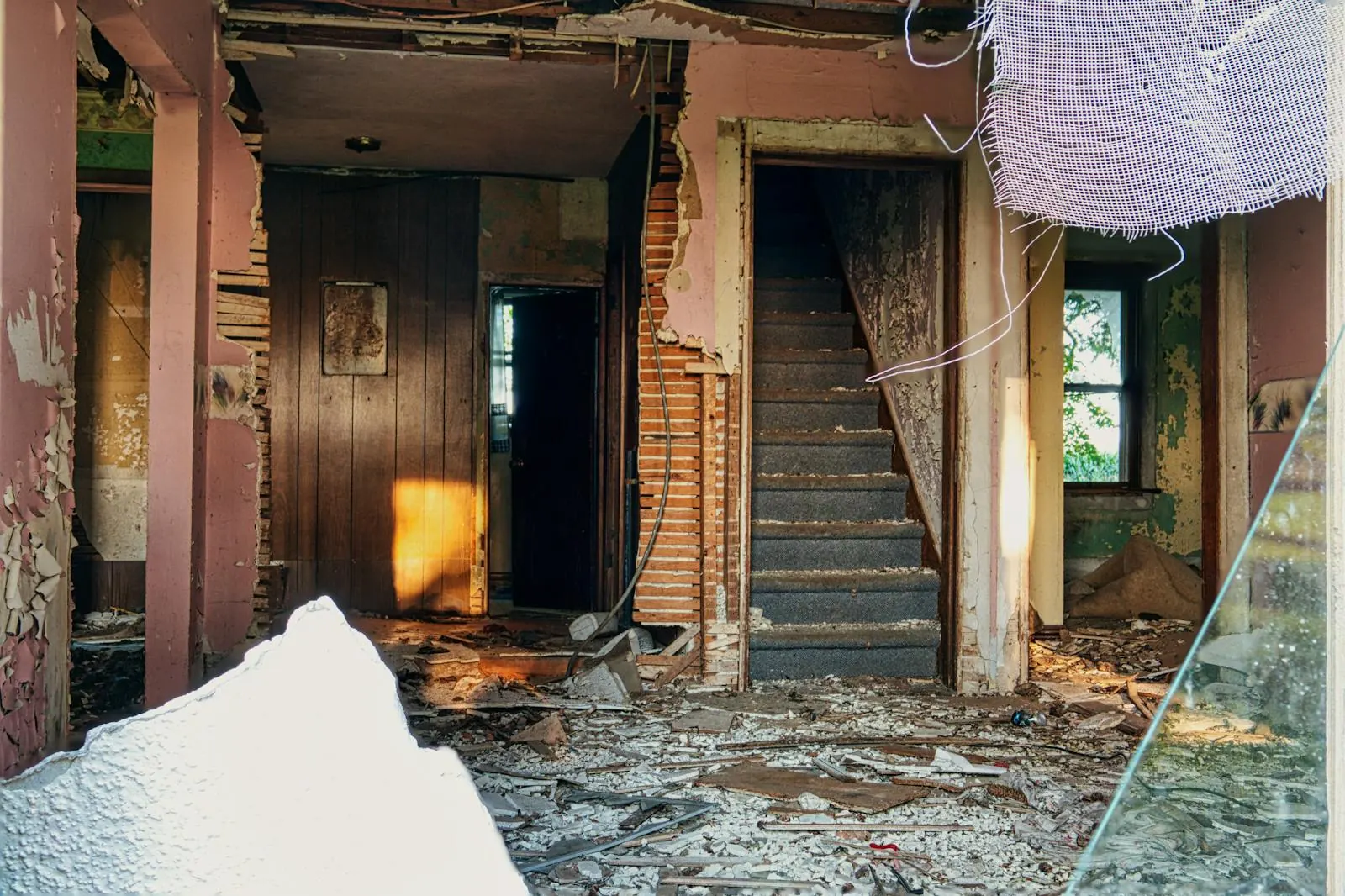
Fairfax's Aging Pipes & Flood-Prone Basements Need a Local Crew That Knows Both
📍 Based on Lee Hwy — 5–10 min to most of 22030, arriving via Jermantown and Old Lee Hwy to avoid Route 50 slowdowns. Galvanized pipe failures in 1950s–70s Colonials. Accotink Creek groundwater intrusion. Flat-roof townhome leaks near the Government Center. We've seen every Fairfax scenario — and we know how to document it for your insurer. IICRC-certified, licensed, insured. Free estimates 24/7.
Fairfax sits at the crossroads of Lee Highway and Chain Bridge Road, and the housing stock here reflects every decade of Northern Virginia's postwar growth in a single ZIP code. The older Colonial and Cape Cod homes lining Old Lee Highway, Jermantown Road, and the streets of Mantua were mostly built between 1950 and 1972 — and they still have their original galvanized steel supply lines. After 50-plus years of mineral-laden Occoquan water running through them, those pipes are corroded from the inside out. A single freeze-thaw cycle, a water hammer from a fast-closing valve, or just the slow attrition of scale buildup is all it takes. We run Category 2 contamination protocol on every galvanized-pipe failure in Fairfax because the rust and bacteria that colonize these lines make plain extraction inadequate. At the other end of the housing spectrum, the townhome clusters along Route 50 near the Fairfax County Government Center — many built in the 1990s and early 2000s — present a different problem entirely: flat or low-slope roof sections that pool standing water, HVAC condensate lines that back up into ceiling cavities, and shared mechanical chases where a single unit's problem becomes a building-wide event. We respond to both Fairfaxes — and we know before we arrive which one we're walking into.
Neighborhoods & streets we serve in Fairfax: Old Town Fairfax, Mantua, Kings Park West, Fair City, Fairfax Circle, Greenbriar, Pender Village, Fairfax Station corridor, Old Lee Highway corridor, Jermantown Road area. Primary corridors: Lee Highway, Chain Bridge Road, Pickett Road, Jermantown Road, Main Street, Route 50 / Lee Jackson Memorial Hwy.
Fairfax — Frequently Asked Questions
Real questions from Fairfax homeowners and renters. Straight answers.
Built for Fairfax — Not Just Nearby
Local knowledge that only comes from responding to hundreds of Fairfax properties across every neighborhood and housing era.
5–10 Min to Most of 22030
Our base is on Lee Hwy — we reach Mantua, Kings Park West, and Fairfax Circle faster than any crew staging from outside the city, via Jermantown and Old Lee Hwy rather than congested Route 50.
Galvanized Pipe Contamination Protocol
Fairfax's 1950s–70s Colonial and split-level stock has galvanized supply lines we treat as Category 2. We document the contamination classification specifically so your insurer pays for proper remediation — not just drying.
Accotink Creek Flood Response
Low-lying Fairfax properties near Accotink Creek tributaries face groundwater intrusion patterns unique to this watershed. We carry the pump capacity for rapid basement extraction and understand the clay-soil drainage delay that keeps pressure elevated for days after a storm.
Commercial & Government Complex Coverage
We handle commercial restoration at office buildings and facilities near the Fairfax County Government Center corridor. Chain-of-custody documentation, multi-floor response capability, same 24/7 dispatch as residential.
What a Typical Fairfax Response Looks Like
📍 Mantua neighborhood — January, 11:42 PM
A homeowner on Pickett Road called after discovering water pooling across the kitchen floor. The 1964 split-level had original galvanized supply lines throughout. A joint on the hot-water supply to the kitchen had finally failed — weakened by decades of mineral scale reducing the pipe's interior wall thickness. By the time the homeowner found it, water had traveled through the subfloor into the basement ceiling.
We were on site in 8 minutes. Thermal imaging confirmed moisture in the basement ceiling and one wall cavity that showed no visible damage. Because the source was a galvanized pipe, we opened a Category 2 protocol: extraction, antimicrobial treatment of all contacted surfaces, controlled demolition of wet drywall, and three days of structural drying with daily moisture log readings.
The insurer paid the full claim. Total dry-out: 3 days. The homeowner used our documentation to negotiate a full galvanized-to-copper repiping credit with their insurance adjuster — something that would not have happened without proper Category 2 classification from the start.
What Our Crew Looks For First in Fairfax
🏚️ Older Homes (Pre-1975)
We check galvanized supply lines at fittings first — that's where corrosion concentrates. We also inspect basement block walls for efflorescence that signals long-term moisture migration before the visible event. In these homes we almost always find secondary moisture that the homeowner didn't know existed.
🏘️ Townhomes & Newer Builds
In Route 50 corridor townhomes we go straight to the HVAC condensate drain and the flat-roof penetration points. These are responsible for 60%+ of ceiling water events in 1990s–2000s Fairfax townhomes. We also check shared mechanical chases to confirm water hasn't migrated to adjacent units — something standard crews skip.
🌧️ After Major Rain Events
Fairfax's clay-dominant Piedmont soil doesn't drain fast. We don't pull drying equipment after 24 hours just because surfaces feel dry — we keep moisture meters on foundation walls for 48–72 hours post-storm because hydrostatic pressure keeps pushing water in long after the rain stops.
❄️ Freeze Events
Fairfax sees 3–5 hard freeze events per winter. Uninsulated pipes in attached garages and exterior wall cavities are the primary failure points. After every freeze we check crawlspace supply lines and exterior hose bibb connections before calling a property clear — these are the second failure points that cause repeat calls in February.
How Fairfax's Climate & Infrastructure Affect Water Damage
Fairfax city's water supply runs moderately hard at around 7–10 grains per gallon, sourced from the Occoquan Reservoir and treated at the Upper Occoquan Service Authority plant. Over years, the mineral scale buildup inside water heater tanks and washing machine supply lines leads to failure points that are easy to miss until a connection lets go entirely. We've seen the result many times on Pickett Road and near the Greenbriar subdivision — a slow drip behind drywall that only surfaces after mold has already colonized the wall cavity. Fairfax also sits in a humid subtropical climate band with 42 inches of annual precipitation concentrated in summer thunderstorm season. The clay-heavy Piedmont soil around foundations drains poorly, meaning any breach in basement waterproofing on properties near Accotink Creek tributaries can result in rapid groundwater intrusion — not just surface flooding. Summer humidity regularly sits above 75% relative humidity from June through September, which means unaddressed moisture in wall cavities can develop visible mold within 48–72 hours — well within the window of a weekend.
Services Most Commonly Needed in Fairfax
Based on Fairfax's housing stock and the most common callout patterns in 22030 — older homes with aging supply lines, Accotink-adjacent basements, and townhome roof and HVAC issues.
Burst Pipe Damage Cleanup
Galvanized and copper pipe failures in Fairfax's 1950s–70s homes — with proper Category 2 contamination protocol when needed.
Basement Damage Restoration
Accotink Creek watershed flooding and hydrostatic groundwater intrusion in Fairfax's clay-soil foundation zones.
Ceiling Water Damage Restoration
Flat-roof membrane failures and HVAC condensate overflows in Fairfax townhomes — with roof penetration documentation for insurance.
Appliance Leak Cleanup
Washing machine and dishwasher supply hose failures — very common in Fairfax's older housing stock where original rubber hoses were never replaced.
Crawlspace Water Damage Cleanup
Many of Fairfax's split-levels and ramblers have unencapsulated crawlspaces that collect moisture year-round — especially after summer storms.
Mold Remediation Services
Fairfax's humidity profile means untreated water damage grows mold within 48–72 hours. We test, remediate, and provide post-clearance documentation.
Commercial Water Damage Repair
Office buildings along the Chain Bridge Road Government Center corridor — multi-floor extraction capability, same 24/7 dispatch as residential.
Hardwood Floor Water Damage Restoration
Original hardwood floors in Fairfax's Colonial and Cape Cod homes — we attempt drying-in-place before any demo decision.
Emergency Sump Pump Installation & Repair
Sump pump failures during heavy rain events are one of the most common Fairfax emergency calls — we carry replacement units on every truck.
Restoration Services We Provide in Fairfax
Every service below is performed by our own IICRC-certified crews in Fairfax, VA — same crew, same response time, same standard. We do not subcontract our core restoration work.
Water Damage
Mold Remediation
Fire & Smoke
Storm Damage
Repair & Contents
Biohazard
Other Communities We Serve
Annandale, VA
ZIP 22003 · Full restoration services available throughout Annandale — same certified crew and 24/7 dispatch.
Service Details →Centreville, VA
ZIP 20120 · Full restoration services available throughout Centreville — same certified crew and 24/7 dispatch.
Service Details →Fair Oaks, VA
ZIP 22033 · Full restoration services available throughout Fair Oaks — same certified crew and 24/7 dispatch.
Service Details →McLean, VA
ZIP 22101 · Full restoration services available throughout McLean — same certified crew and 24/7 dispatch.
Service Details →Reston, VA
ZIP 20190 · Full restoration services available throughout Reston — same certified crew and 24/7 dispatch.
Service Details →Coverage Throughout Fairfax, VA
Water Damage in Fairfax? Call the Crew That Knows This ZIP Code.
📍 Based on Lee Hwy — 5–10 min to most of 22030. Free on-site assessment, 24/7 emergency dispatch, direct insurance coordination. We document everything your adjuster needs from the first visit.
Call (571) 708-6083