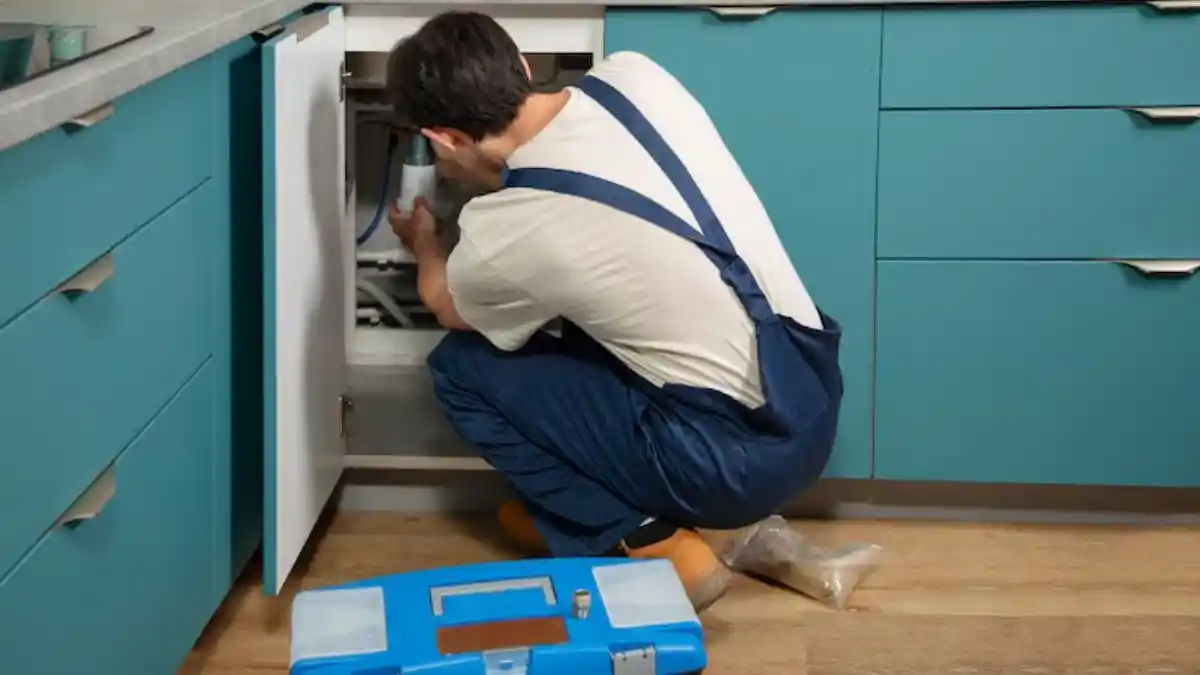
Kitchen Water Damage Cleanup in Fairfax, Virginia
IICRC-certified kitchen water damage cleanup throughout Fairfax, VA. Rapid response, transparent pricing, insurance-ready documentation.
A kitchen leak rarely announces itself where it starts. By the time water shows on the floor in front of the sink or along a cabinet toe-kick, it's usually been running inside the cabinet box or under the flooring for longer than the visible sign suggests. Kitchen Water Damage Cleanup starts by finding the actual source — supply line, drain, disposal, or appliance connection — before deciding what needs to come out and what can be dried in place.
Kitchens fail in a narrow set of predictable ways: a dishwasher supply or drain hose splits, a sink's P-trap or supply line lets go, a refrigerator ice-maker line pinholes, or a garbage disposal seal wears out and backs up. What varies is what's underneath when it happens — tile and LVP flooring common in newer Fairfax-area kitchens tolerate a delayed discovery far better than the original hardwood still found in older homes throughout Vienna, Annandale, and Mantua, where the same leak reaches the wood grain and starts cupping within days instead of weeks.
What Kitchen Water Damage Cleanup Typically Costs in Fairfax
Typical range: $800 – $6,500 for a mid-scope residential kitchen event in the Fairfax County area. We document everything photographically and provide a written scope before any work begins.
What affects pricing on a kitchen water damage cleanup job:
- Whether cabinet boxes swelled and need replacement, or the doors and face frame can be saved
- Flooring type — tile and LVP tolerate water very differently than hardwood
- How long the leak ran before it was caught — a slow drip behind a dishwasher for weeks does more damage than a sudden supply-line failure
- Whether the water was clean (supply line) or carried organic contamination (disposal or drain backup)
- Whether cabinet, counter, or flooring materials need to be special-ordered to match what's already there
About insurance: Most kitchen water events that start from a sudden appliance or supply-line failure qualify for insurance coverage. Slow leaks that went unnoticed for an extended period sometimes get more scrutiny from adjusters as a maintenance issue rather than a sudden loss — we document the likely timeline honestly either way, since that record is what determines how the claim gets classified.
Want a real number for your situation? Call (571) 708-6083 for a free on-site assessment.
How Kitchen Water Damage Cleanup Works
Find the Actual Source
Not just the puddle you see — we trace it back to the supply line, drain, appliance connection, or fixture that's actually failing.
Shut Off the Specific Line
Isolate water to the failed fixture or appliance rather than the whole house, so the rest of the kitchen stays usable during the repair.
Extract Standing Water
Floor surface and cabinet interiors — water pools inside cabinet boxes and toe-kicks as much as it does on the visible floor.
Check Subfloor and Toe-Kick Cavities
Moisture meters at the sink, dishwasher, and refrigerator cutouts — the specific points where plumbing penetrates the floor.
Dry in Place Where Possible
Injection drying for cabinet cavities caught early; full removal only for materials that have already swollen or delaminated.
Rebuild as One Coordinated Job
Cabinets, flooring, and counters scheduled together so you're not waiting on three separate trades to show up on three separate days.

Kitchen Water Damage Cleanup — What People Ask First
More Water Damage Services in Fairfax
Appliance Leak Cleanup
Dishwasher, refrigerator, and disposal failures — the most common source of kitchen water damage.
View Service →Plumbing Overflow Cleanup
Sink and fixture overflow cleanup, including the multi-floor mapping a kitchen leak sometimes needs.
View Service →Hardwood Floor Water Damage Restoration
When the kitchen sits on hardwood instead of tile or LVP, drying and repair follow a different protocol.
View Service →Where We Respond — Fairfax and Surrounding Communities
Annandale · Burke · Centreville · Chantilly · Fair Oaks · Fairfax · View All Service Areas
Kitchen Water Damage Cleanup Across Fairfax, VA
Need Kitchen Water Damage Cleanup Now? Call (571) 708-6083
Our Fairfax team is on-call 24/7. Call now for a free, no-obligation quote.
Call (571) 708-6083